A Ponte Vedra Beach REALTOR® shares a Florida home-maintenance lesson I learned the hard way.
Quick Answer: How often should you clean your AC condensate drain line in Florida?
Living in Florida, I put checking and maintaining my AC condensate drain line on my monthly home-maintenance calendar. Florida's heat and humidity mean our air conditioners remove a tremendous amount of moisture from our homes. Keeping that drain line clear can help prevent clogs, AC shutdowns and water damage.
But before cleaning yours yourself, ask your HVAC professional to show you the method they recommend for your particular system. Different systems can have different configurations.
When I moved from Minnesota to Florida, I knew there would be things I had to learn about maintaining a home in a completely different climate.
What I didn't know was just how much I was going to learn about my air conditioner condensate drain line.
Unfortunately, I learned several of those lessons the hard way.
I've dealt with clogged condensate lines, an AC that mysteriously shut itself off, landscaping that blocked the outside drain and even water damage that made its way to a ceiling below.
None of these experiences turned me into an HVAC technician—and I certainly don't pretend to be one.
But they did turn me into a Florida homeowner and REALTOR® who pays very close attention to one little PVC pipe that is very easy to forget.
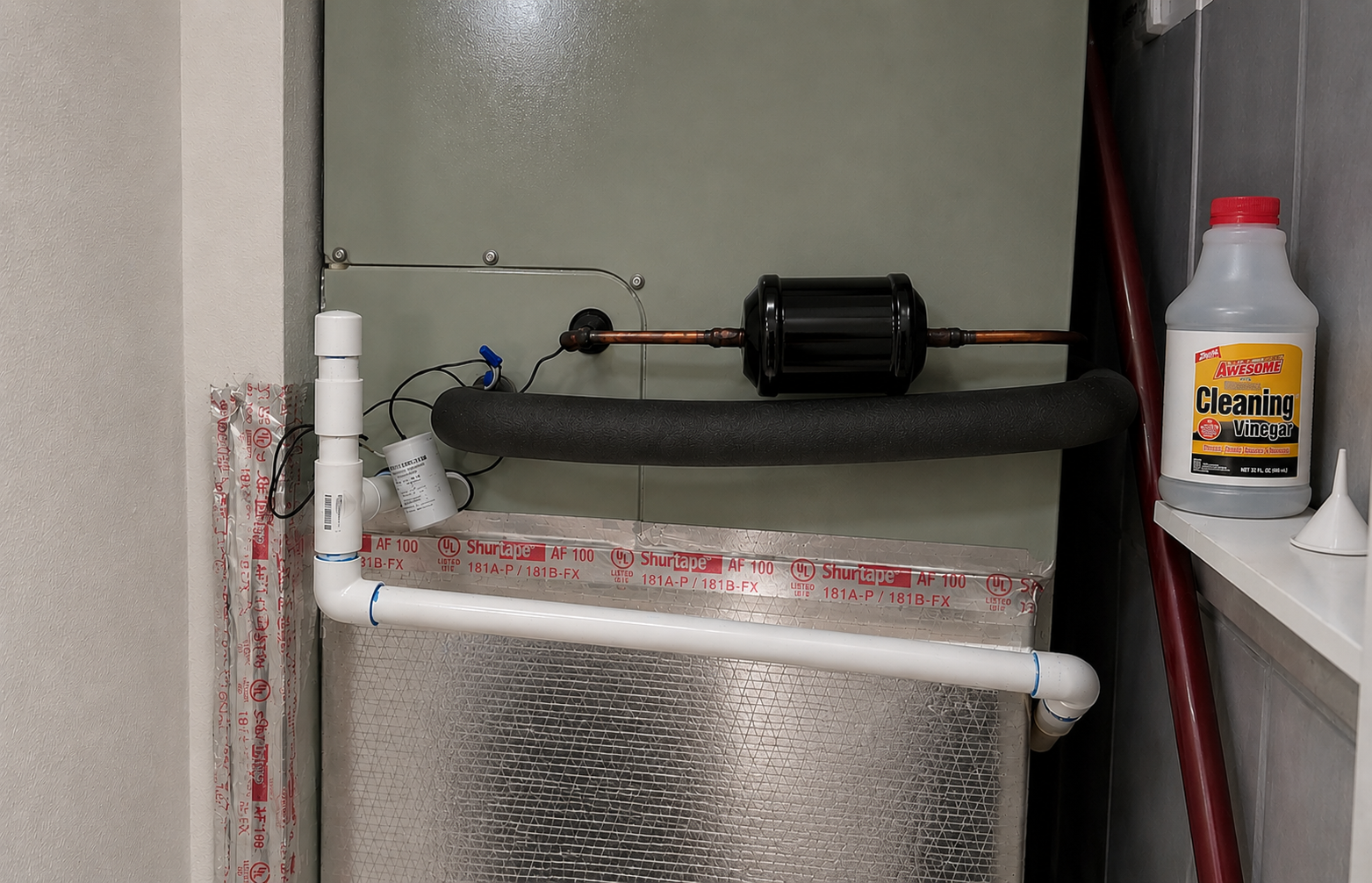
First: What Is an AC Condensate Drain Line?
Your air conditioner doesn't just cool your Florida home. It also removes moisture from the air.
As warm, humid air passes over the evaporator coil, moisture condenses into water. That water collects and then needs somewhere to go.
The condensate drain line carries that water away from the HVAC system and usually drains it outside your home.
Your condensate line carries that moisture away.
University of Florida Institute of Food and Agricultural Sciences (UF/IFAS) specifically recommends keeping condensate drain lines clean as part of controlling humidity in Florida homes.
That small drain line has a surprisingly important job.
Why Do AC Drain Lines Clog So Easily in Florida?
Our air conditioners work hard in Ponte Vedra Beach and throughout Northeast Florida.
Dust and other airborne particles can mix with the moisture being removed from your home's air. Over time, debris and organic buildup can accumulate inside the condensate drain and create a blockage.
When that happens, the water your AC is removing from your home may no longer have a clear path outside.
And that's when a very small maintenance issue can become a much bigger one.
Signs of a possible clogged condensate line can include:
- Water around your indoor HVAC equipment
- Water collecting in a drain pan
- Musty odors
- Water stains on walls or ceilings
- Your AC suddenly shutting down
- Your AC refusing to turn back on
My Florida AC Education Began After Moving Here From Minnesota
One of the first things I learned after moving from Minnesota to Florida was that my HVAC maintenance habits needed to change.
In Minnesota, I was accustomed to having my system professionally checked once a year.
Here in Florida, I have mine checked twice a year.
That makes sense to me because our air-conditioning systems work incredibly hard for much of the year. In fact, some HVAC manufacturers recommend spring and fall professional maintenance for heat-pump systems.
But then I learned another lesson:
Don't assume that because your HVAC technician performed a maintenance visit, your condensate line was thoroughly cleared.
After dealing with a clogged line, I learned to specifically ask:
“Did you clear my condensate drain line?”
The technician may vacuum it, blow it out or use another method appropriate for the system.
I simply want to know that it was checked and cleared.
When you have your HVAC professionally serviced, don't be afraid to ask whether cleaning and checking the condensate drain line is included. I now specifically ask before the technician leaves.
How I Maintain My AC Condensate Line Between Professional Visits
This is where I want to be very clear:
I am a REALTOR® and homeowner—not an HVAC technician.
I have heard several different recommended methods for maintaining condensate lines, and systems can be configured differently.
So my advice is simple:
Ask your HVAC technician to show you exactly how they recommend you maintain YOUR condensate line between professional visits.
Once you know what is appropriate for your system, this may be a surprisingly easy home-maintenance task.
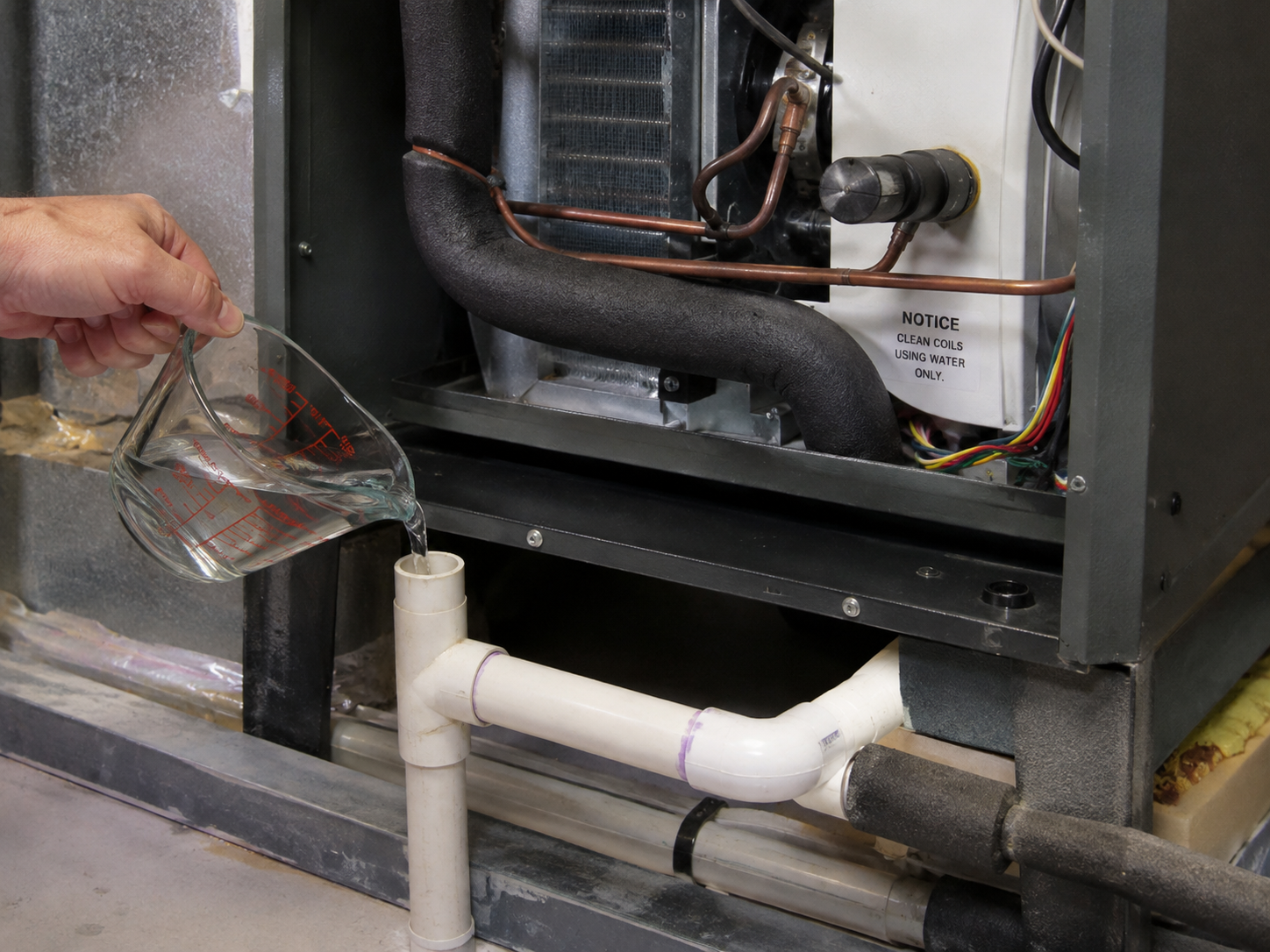
For example, this is what I personally do with my system:
- I raise my thermostat to 85F so the AC is effectively off.
- I locate the condensate-line access and remove the cap.
- Using a funnel, I pour approximately one cup of a warm distilled-vinegar-and-water mixture into the access pipe.
- I let it sit for approximately 15 minutes.
- I then flush the line with approximately a cup of water.
- I replace the cap and turn my air conditioning back on.
Carrier and Trane both discuss distilled vinegar as one method that may be used to help maintain or clear certain condensate drain lines. But again, follow the instructions of your HVAC professional and equipment manufacturer for your particular system.
The important point I want Florida homeowners to take away isn't that you must use my exact method.
It's this:
Don't forget the condensate line.
I put it on my monthly Florida home-maintenance list.
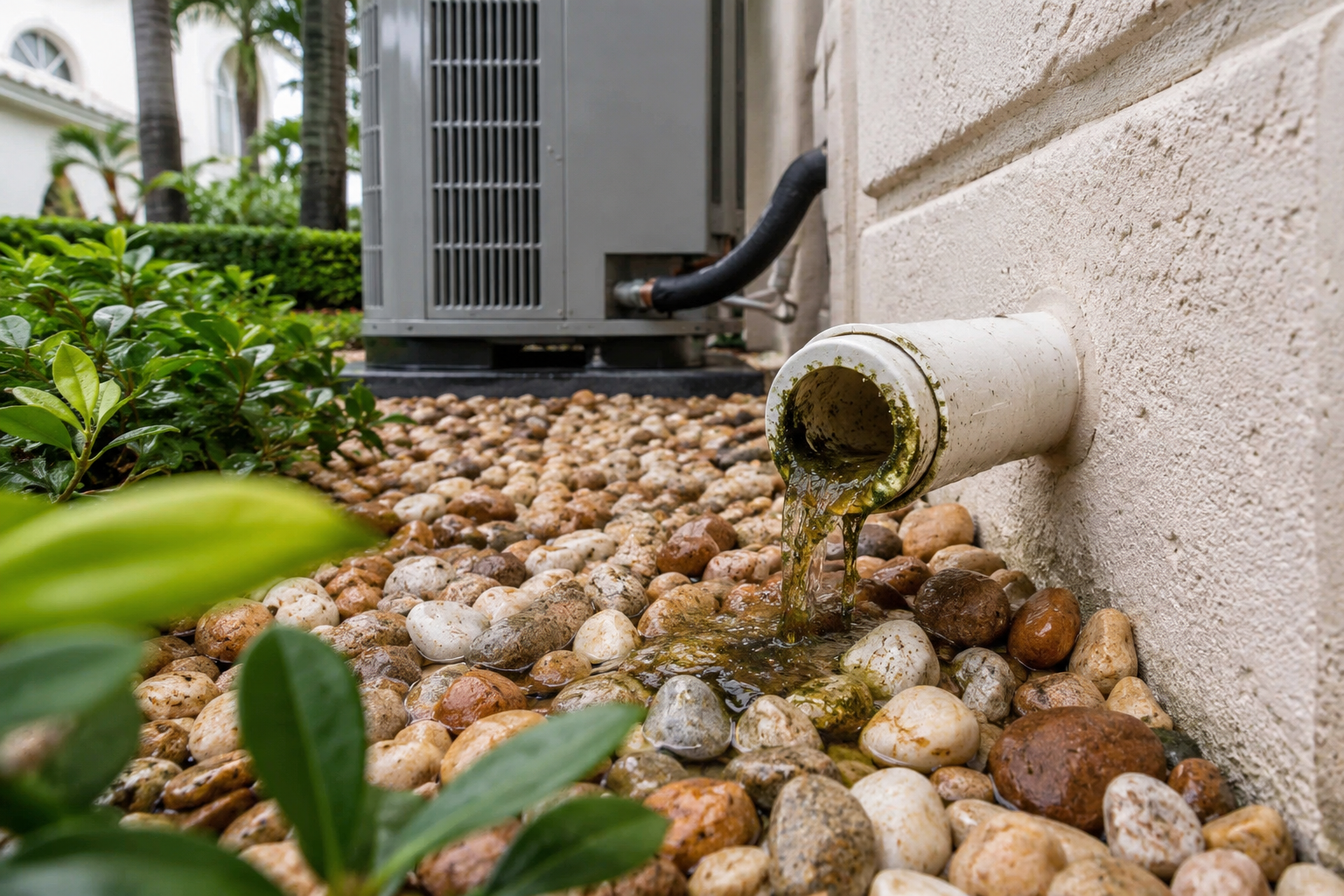
Don't Forget to Check Where the Condensate Line Drains Outside
Here's another lesson I learned through experience.
I had landscaping interfere with the exterior end of my condensate drain.
Rocks, grass, mulch, plants and other landscaping can end up around the place where the condensate line exits the house.
If that outlet becomes obstructed, water may not drain properly and can back up toward the indoor drain pan.
Trane specifically advises keeping the exterior condensate drain free from debris for this reason.
When you're walking around the outside of your house, find out where your condensate line drains. Make sure grass, mulch, rocks, plants or landscaping aren't blocking the outlet.
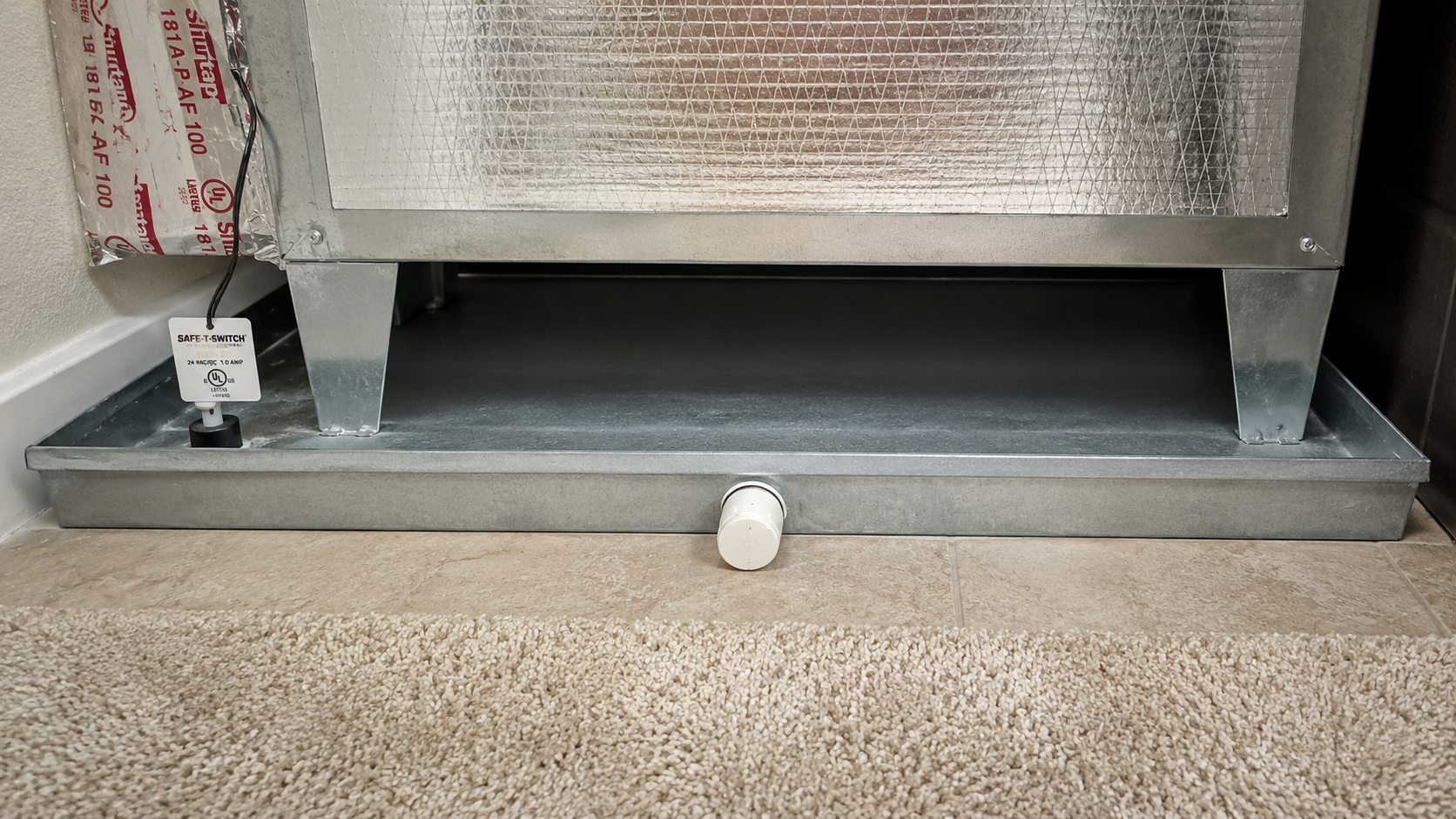
Then I Learned What a Clogged Drain Line Can Do to a House
My first place in Florida did not have a secondary drain pan underneath the HVAC equipment.
Then the condensate line became blocked.
Instead of the water draining harmlessly outside, it ended up where I definitely did not want it.
It reached the floor—and eventually the level below.
Yikes. Ceiling damage.
That's when this inexpensive little maintenance item suddenly became much more memorable.
When we eventually replaced that HVAC system, you can be assured that we added a drain pan underneath the equipment.
Drain-pan requirements and installation details depend upon the location and configuration of the HVAC equipment, so this is another excellent thing to discuss with a qualified HVAC contractor.
Why Would a Clogged AC Drain Line Cause the Air Conditioner to Shut Off?
This one confused me the first time it happened.
Our newer HVAC system suddenly stopped running.
At first, I didn't know what was wrong.
It turned out that the shutdown was actually a safety feature doing exactly what it was designed to do.
Many HVAC systems have a condensate float switch or another moisture-sensing safety device.
If the condensate cannot drain correctly and water begins rising where it shouldn't, the safety switch can shut the HVAC system off before the water overflows and causes damage.
So yes—a clogged condensate line can actually make your AC stop working.
Sometimes the system isn't “broken” at all. A float switch may have shut it down because backed-up condensate is creating a potential water problem.
Carrier specifically identifies system shutdown as one potential sign of a clogged condensate drain and explains that modern systems may use a safety float switch to help prevent water damage.
Of course, an AC can stop working for many reasons. If yours shuts down unexpectedly, don't assume the condensate line is the cause. Have the problem properly diagnosed.
What Should You Ask During Your HVAC Maintenance Visit?
Based on what I've learned as a Florida homeowner, these are the questions I now like to have answered:
- Did you inspect and clear the condensate drain line?
- Is the condensate drain pan in good condition?
- Does my system have a float switch or other condensate overflow protection?
- Is that safety device working properly?
- Where does my condensate line drain outside?
- What do you recommend I do each month to maintain this particular system?
Those are simple questions, but they're questions I didn't know to ask when I first moved to Florida.
Why This Matters Even More in Florida's Humidity
Your AC condensate system is directly connected to one of the biggest home-maintenance issues we deal with in Northeast Florida: humidity and moisture control.
I recently put together a more complete guide explaining the humidity levels Florida homeowners should watch, how your air conditioner helps remove moisture and ways to reduce the risk of mold and musty odors.
Read: How to Control Humidity & Prevent Mold in Your Florida Home
What Does an AC Drain Line Have to Do With Buying a Home?
More than you might think.
When I'm showing homes in Ponte Vedra Beach and the Jacksonville area, beautiful kitchens, pools and finishes naturally get everyone's attention.
But after years in real estate—and after maintaining my own Florida homes—I also pay attention to the less exciting things.
Those can tell us quite a bit about how a home has been cared for.
When evaluating a Florida home, things I want buyers to understand include:
- How old is the HVAC system?
- Has it been professionally maintained?
- Are maintenance records available?
- Are there water stains around or below the HVAC equipment?
- Is there a drain pan where one is appropriate?
- Are there signs of previous moisture problems?
- Does the home smell unusually musty?
None of those things automatically means there's a problem.
But they may tell us what questions to ask and what a home inspector or qualified HVAC professional should examine more closely.
Buying a Home in Ponte Vedra Beach?
I help my buyers look beyond the listing photos and understand the house they're considering—the systems, maintenance history, HOA, neighborhood and the practical realities of owning a home in Florida.
You don't need to know everything about Florida homes before you move here. That's part of what I'm here to help you learn.
And If You're Selling? Maintenance Tells a Story.
A well-maintained home feels different to a buyer.
Maintenance records for the HVAC, roof and other major systems can help demonstrate that you've taken care of your property.
Likewise, a ceiling stain—even one caused years ago by something as simple as a clogged condensate line—may raise questions during a showing or inspection if the history isn't understood.
That's one reason I encourage homeowners to take care of the little things while they're little and keep records of repairs and maintenance.
It's much easier than trying to reconstruct the history of everything when you're ready to sell.
Thinking About Selling Your Ponte Vedra Beach Home?
Before spending money on repairs, replacements or improvements, let's talk about what today's buyers are likely to notice and which projects may actually matter when you sell.
Sometimes an important repair is worth doing. Sometimes a homeowner is about to spend thousands of dollars on something that I wouldn't recommend changing at all.
Frequently Asked Questions About AC Condensate Drain Lines in Florida
Here are quick answers to some of the questions Florida homeowners commonly have about their AC drain lines.
How often should I clean my AC condensate drain line in Florida?
I personally put checking and maintaining my condensate line on my monthly home-maintenance calendar. Trane has also published homeowner guidance suggesting preventive drain-pipe maintenance every month or so. Ask your HVAC professional what schedule and cleaning method are appropriate for your particular system.
Can I use vinegar to clean an AC condensate line?
Distilled vinegar is one method discussed by major HVAC manufacturers for certain systems. Carrier describes pouring distilled vinegar through an indoor condensate-line access point, and Trane recommends asking your HVAC technician to demonstrate the correct procedure. Because systems differ, have your HVAC professional show you the appropriate method for yours.
Can a clogged condensate drain line make my AC stop working?
Yes. Some HVAC systems have a float switch or other moisture-sensing safety device that can shut the system down when condensate backs up. The shutdown helps prevent overflowing water from damaging your home.
What causes an AC condensate drain line to clog?
Dust, dirt and other particles can combine with moisture removed from the air and create buildup inside the drain line. Outdoor debris or landscaping can also interfere with drainage at the exterior outlet.
What are the signs of a clogged AC drain line?
Possible signs include standing water near the indoor HVAC unit, water in the drain pan, musty odors, water stains, leakage or an air-conditioning system that unexpectedly shuts down.
Should my HVAC technician clean the condensate line during maintenance?
Inspection and clearing of the condensate drainage system is commonly part of HVAC maintenance, but don't assume. Ask your technician what is included in your particular maintenance service and specifically confirm that the condensate line and drain pan were checked.
Where does my AC condensate line drain?
In many Florida homes, the PVC condensate line exits the home and drains outside. Ask your HVAC technician to show you exactly where yours terminates so you can periodically make sure landscaping, grass, mulch or debris isn't obstructing it.
My takeaway:
Put “check the AC condensate drain” on your monthly Florida home-maintenance list. Ask your HVAC technician to show you the right way to maintain yours. And during professional HVAC service, make sure the drain line, drain pan and any overflow safety device are actually checked.

About Lois Marris
I'm Lois Marris, a REALTOR® with Ponte Vedra Club Realty in Ponte Vedra Beach, Florida. I help buyers and sellers throughout Ponte Vedra Beach, Ponte Vedra and the Jacksonville area.
Part of helping people make good real estate decisions is helping them understand the homes they're buying, selling and maintaining. Florida homeownership comes with a learning curve, and I enjoy sharing the practical things I've learned both as a real estate professional and as a Florida homeowner.
More Florida Home Maintenance Tips from Lois
If you own—or are thinking about buying—a home in Ponte Vedra Beach or Northeast Florida, you may also find these helpful:
Trusted Homeowner Resources
For additional information about HVAC condensate drainage and maintaining Florida homes:
- UF/IFAS Extension – Understanding Florida Homes: Humidity, Mold and Energy Use
- Carrier – How to Clean an AC Drain Line
- Trane – AC Condensate Drain Line Maintenance
Important: I am a REALTOR® and Florida homeowner, not an HVAC technician. I share my personal home-maintenance experiences for general educational purposes. HVAC systems and condensate drainage configurations vary. Before performing maintenance yourself, consult a qualified HVAC professional and follow the recommendations and instructions for your specific equipment.